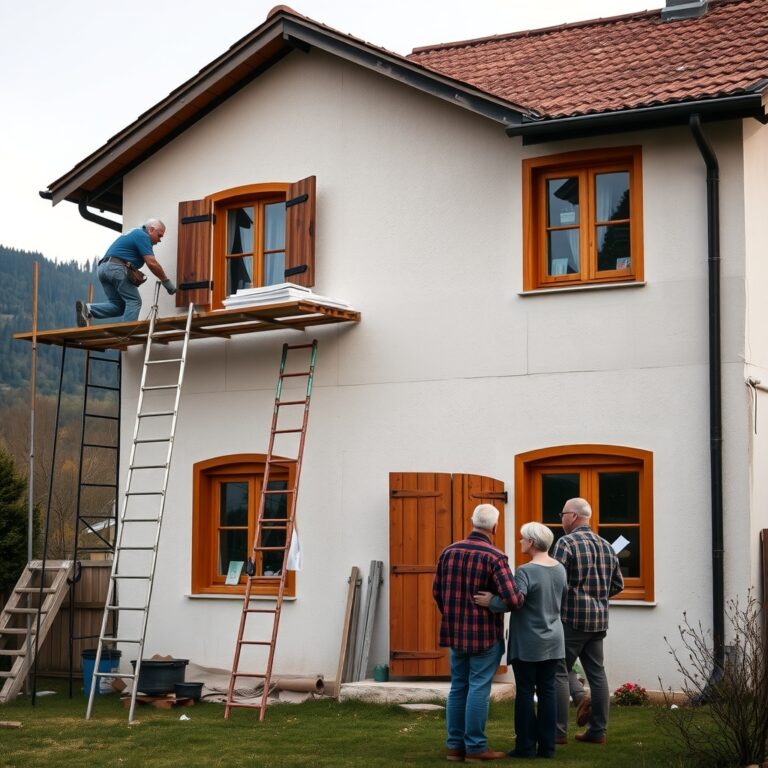
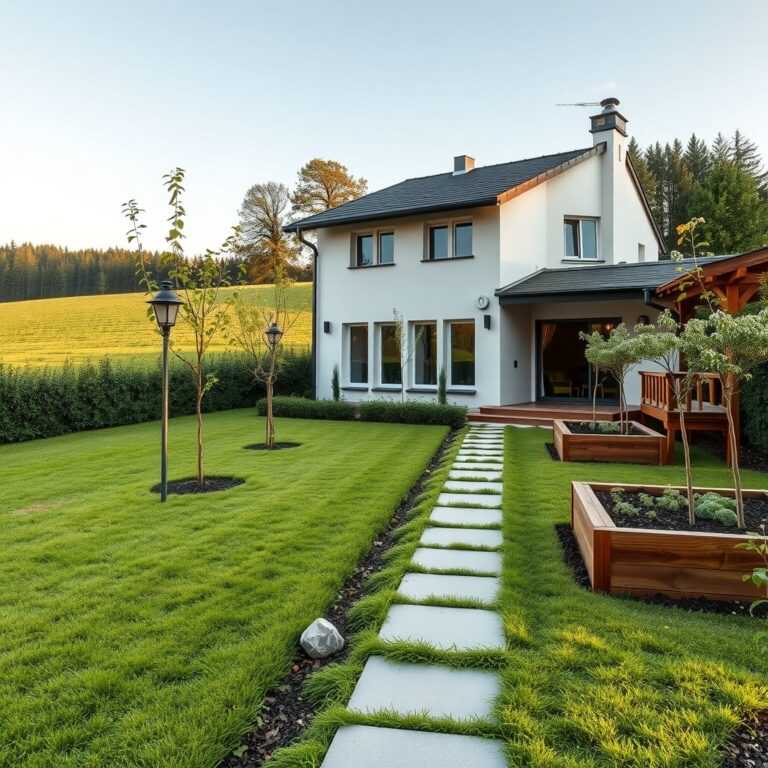
Building a turnkey house in Slovenia currently costs roughly €1,700 to €2,300 per square metre of net floor area, excluding the plot. For a 140 m² house that means around €240,000 to €320,000 – and once you add design fees, the municipal utility contribution, connections, landscaping and fittings, the total quickly climbs by another few tens of thousands of euros.
How much does it cost to build a house per m² in 2026?
There is no single price: it depends on the region, the shape of the house, material quality and what the builder actually counts as “turnkey”. Current quotes and market reports give a useful starting point. The Slovenian platform Moj mojster quoted around €2,000 net per m² for a turnkey house in Ljubljana even before the latest wave of price rises. One homeowner who documented his build this year paid €247,000 for a 140 m² turnkey prefab house, or roughly €1,760 per m².
Prices are still rising. In a Moj mojster survey of 105 Slovenian contractors (July 2026), 65.7% had raised prices this year, and average renovation prices were 10–15% higher than a year earlier. Finishing work such as screeds, plastering and flooring saw the steepest increases.
| Build stage | What it includes | What to check in the quote |
|---|---|---|
| Shell under roof | foundations, load-bearing walls, slabs, roof structure, roofing | whether excavation and the foundation slab are included |
| Extended shell | plus windows, front door, often the façade | which windows and what façade are in the price |
| Turnkey | services, screeds, plaster, finishes, bathrooms | roughly €1,700–2,300/m² net |
Builders define “shell” and “extended shell” differently, so only compare quotes based on the same bill of quantities. Always check whether the price refers to net or gross floor area, as gross area also includes the external walls.
Building a house in stages: what you pay and when
House building costs are easiest to control when you split them by construction stage. That way you know how much money has to be available at each step and avoid surprises with the bank.
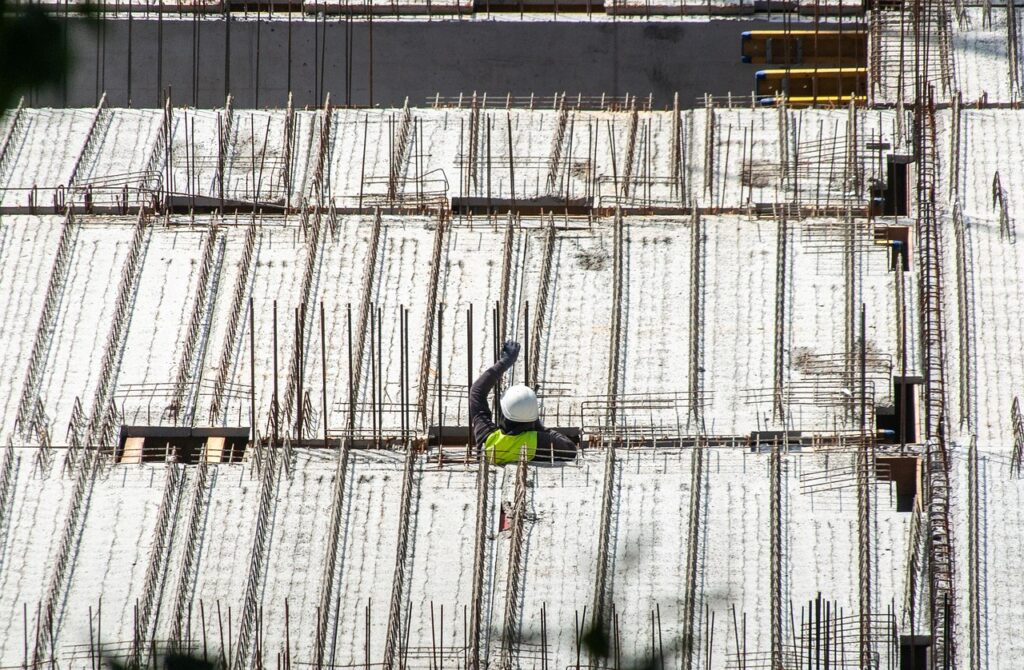
- Preparation: buying the plot, land survey, design documents (including construction drawings), building permit and, if needed, a geotechnical report.
- Foundations: setting out, excavation, foundation slab or strip footings with waterproofing.
- Basement: only if the house has one – excavation, slab, walls, insulation and backfill. A basement adds considerably to the cost.
- House under roof: walls, floor slabs, roof structure, roofing, gutters and chimney.
- Finishing: electrics and plumbing, insulation, screeds, plaster, windows, doors, floor and wall finishes, bathroom fittings and kitchen.
Mistakes in the foundations or basement are the most expensive to fix later, so do not cut corners on supervision and workmanship there.
House building costs a quote usually leaves out
When a builder gives you a price per m², it almost never covers everything. People who have recently built in Slovenia report the following items (amounts vary widely by municipality and project):
- design documents: around €5,000–10,000,
- municipal utility contribution (komunalni prispevek): from a few thousand to about €30,000, depending on the municipality and house size,
- site supervision: around €5,000–10,000,
- excavation and foundation slab for a prefab house, if not included: up to €25,000–30,000,
- connections to power, water and sewage: from a few thousand euros upwards,
- landscaping (driveway, terrace, fence, lawn): often €30,000 or more,
- kitchen, built-in furniture and lighting: from €20,000 upwards.
Do not guess the municipal contribution: each municipality calculates it under its own ordinance, so ask for an informal estimate before you buy the land. Some Slovenian municipalities subsidise part of it for young families.
In municipal regulations you will also come across an “average construction price”. The municipality of Mengeš set it at €1,114.39 per m² of residential floor area for 2026. This figure is used for administrative calculations; it does not tell you what you will actually pay a builder.
Prefab or traditional build: price and differences
Sources disagree on the price gap. Some say a prefabricated house is 10–20% cheaper than a comparable brick one, while Moj mojster’s enquiry data suggested brick construction was in fact around 10% cheaper. In practice, at the same energy standard the difference is small; size and complexity of the house have a far bigger effect on cost.
| Prefab house | Traditional (brick) house | |
|---|---|---|
| Build time | under roof in days, ready to move in within months | usually much longer, often over a year |
| Price | more predictable, fixed quote | more dependent on contractors and season |
| Customisation | limited to the manufacturer’s system | more design freedom |
| DIY work | harder to include | easier to include |
With prefab quotes, check whether the foundation slab, connections and finishing work are included. Many “base” prices exclude them.
The cheapest way to build a house: where you can really save
The biggest savings are made at the design stage. A simple rectangular house with a gable roof and no basement is much cheaper than an irregular multi-storey house with a glass façade and a basement. Every square metre less means less material, less labour and lower heating bills.
- Choose a compact shape and skip the basement if you do not need it.
- Get at least three comparable quotes based on the same bill of quantities.
- Self-managing the build can cut labour costs, not material costs, and demands a lot of time and a good site supervisor.
- Some finishing work (painting, part of the flooring) can be done yourself later, once your finances recover.
- Check the current call from Eko sklad, Slovenia’s environmental fund, for nearly zero-energy new builds, and any municipal subsidies.
Do not skimp on insulation, windows or waterproofing. Those mistakes are paid for twice: in repairs and in energy bills.
Example calculation for a 140 m² house
Say a turnkey house costs €1,800 per m² net. A 140 m² house then comes to €252,000. Add about €10,000 for plans and supervision, €10,000 for the municipal contribution, €5,000 for connections, €30,000 for landscaping and €25,000 for the kitchen and furniture. That brings you to roughly €330,000 without the plot. Add another 10% contingency for unexpected costs and price rises during construction.
Frequently asked questions
How much does it cost to build a house up to the roof?
There is no fixed share, as it depends on the structure, the basement and what the builder counts in that stage. A large part of the money goes on services and finishing, so ask for a quote split by stage and do not assume the shell is most of the cost.
Is a prefab house cheaper than a brick one?
Not necessarily. Sources report differences in both directions, around 10–20%. A prefab house is faster to build and its price is more predictable, while a brick house allows more customisation and DIY work.
How much can you save by self-building?
You can save on labour and the main contractor’s margin, but materials cost the same. The saving depends on how much work you really do yourself, and you pay for it with a longer timeline and a higher risk of mistakes.
What does a turnkey house price include?
Usually the house with services, windows, doors, screeds, plaster, finishes and bathroom fittings. The kitchen, furniture, landscaping, municipal contribution and connections are generally not included, so always check the bill of quantities.